Guides · 7 min read
Pollution cough and sore throat: why smog makes you cough, what helps, and when to see a doctor
A pollution cough comes from fine particles irritating your airways. How to tell it from a cold, what actually helps, and the warning signs that need a doctor.
 By the Good Air team
In this article · 7 sections
A pollution cough is a dry, scratchy cough, often with a sore throat and stinging eyes, caused by fine particles and gases irritating the lining of your nose, throat and airways. It tends to ease once you are breathing cleaner air; the fix is to cut how much smog you breathe, and to see a doctor if you are short of breath, wheezing, have chest pain, or the cough lasts more than three weeks.
It is the season for it. Delhi NCR's air was still Satisfactory to Moderate on CPCB's 24-hour bulletin for 16 October 2026: Delhi 90, Ghaziabad 105 (CPCB AQI bulletin, 16 October). But the Air Quality Early Warning System run by the Indian Institute of Tropical Meteorology forecast Delhi's air to turn Poor from 19 October and stay there for the following week (IITM Early Warning System, 16 October). Poor and Very Poor days bring a jump in coughs, sore throats and breathlessness across North India every winter.
Why does air pollution make you cough?
Coughing is how your airways try to clear something that should not be there. Smog carries two kinds of particles that set it off:
- PM10, coarse dust and soot up to 10 micrometres across, mostly lands in the nose, throat and upper airways. That is where the scratchy throat comes from.
- PM2.5, fine particles 2.5 micrometres or smaller, gets much deeper. The American Lung Association says these particles "bypass our body's natural defenses", making their way deep into the lungs (American Lung Association, 27 May 2025).
The US Environmental Protection Agency (EPA) lists the short-term effects of particle pollution as airway irritation, coughing and difficulty breathing, along with worse asthma and reduced lung function (US EPA, updated 5 May 2026). Gases in smog, such as nitrogen dioxide from traffic, add to the irritation. Our explainer on PM2.5 vs PM10 goes into the particles in more detail.
What are the symptoms of pollution exposure?
India's Ministry of Health and Family Welfare updated its air pollution guidance for states in November 2025. The update lists these effects of short-term high exposure (DT Next with PTI, 12 November 2025):
- irritation of the eyes, nose, throat and skin
- cough, breathing difficulty and wheezing
- chest discomfort or pain
- headache and giddiness
- in serious cases, limb weakness and facial deviation, which are signs of a stroke
The advisory warns that in vulnerable people, high pollution can set off asthma and bronchitis attacks, worsen chronic obstructive pulmonary disease (COPD), and bring on heart attacks and strokes.
Is it a pollution cough, a cold or an allergy?
There is no test you can do at home, but the pattern helps. A pollution cough tracks the air: it is worse on smoggy days and after time near traffic, and eases indoors with clean air. A cold or flu is an infection; it usually brings a fever, body aches or a blocked nose with thick mucus, and runs its course whatever the air is like.
| Clue | Pollution irritation | Cold or flu |
|---|---|---|
| When it starts | On smoggy days, after time outdoors or in traffic | Any time, often after contact with someone ill |
| Eyes | Often stinging or watering | Less often |
| Fever | Not typical | Common with flu, sometimes with a cold |
| Gets better | As the air clears or once you are indoors in clean air | Runs its course whatever the air is like |
The two often overlap. Polluted air irritates airways that are already inflamed by a cold, so a cough that started with an infection can hang on through smog season. If you are not sure, or you have a fever, a doctor is the right person to ask.
What helps a pollution cough?
The single thing that works is breathing less polluted air. Remedies cannot undo particles you keep inhaling.

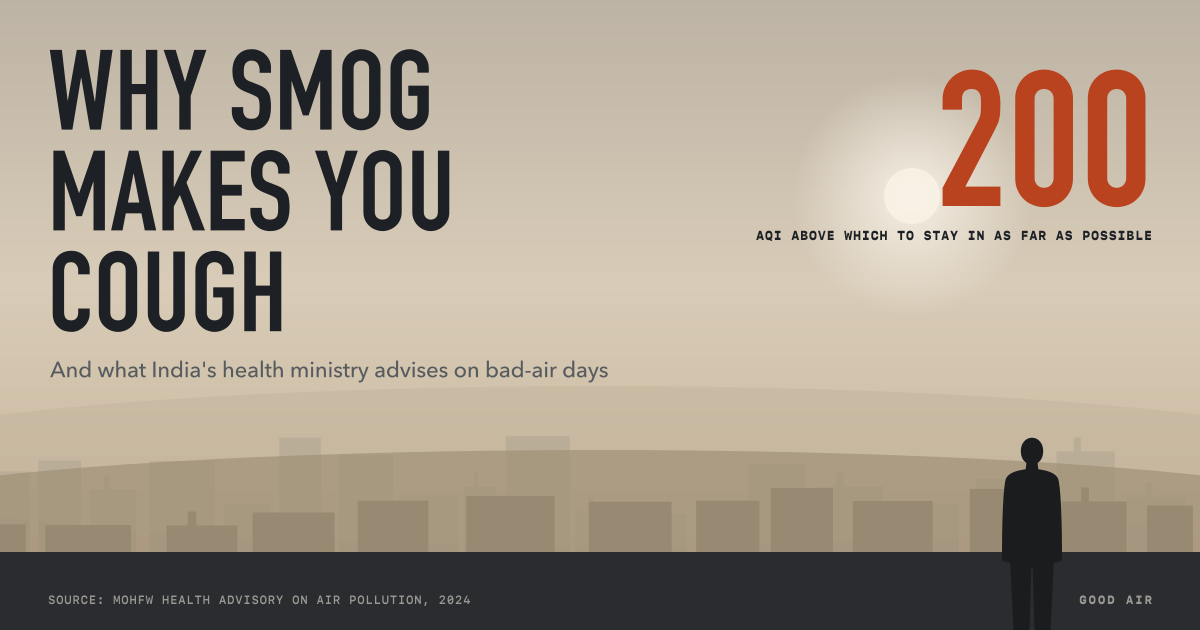
India's Ministry of Health and Family Welfare sets out what to do in its health advisory on air pollution, sent to all states with a letter from the Union Health Secretary on 18 November 2024 (MoHFW advisory under NPCCHH, 2024). Its steps for days when the AQI is above 200 (Poor or worse):
- Check the air before you go out. The advisory says to reschedule outdoor activities by the AQI and stay indoors on Poor to Severe days. Readings differ a lot between neighbourhoods, so check your city's live page rather than one number for the region.
- Skip mornings and late evenings. It advises against walks, runs and exercise outdoors in the early morning and late evening, when cold, still air traps smog near the ground, and against opening outside doors and windows at those hours. If you need to air a room, do it between 12 pm and 4 pm.
- Keep away from traffic and dust. Avoid roads with slow, heavy traffic, construction and demolition sites, polluting industry, coal power plants and brick kilns.
- Rinse and gargle. The advisory suggests washing your eyes with running water and gargling regularly with warm water.
- Wear a fitted N95 or N99 mask outdoors. The advisory says these help if they fit over mouth and nose and you follow the instructions, and that paper masks, handkerchiefs, scarves and cloth are not effective. Our guide to N95, KN95 and FFP2 masks explains the ratings and fit.
- Make one clean room. Keep the windows shut and run an air purifier sized for the room where you sleep. The advisory warns against purifiers that work by generating ozone, which adds to indoor pollution. Our guide to air purifier size and CADR shows how to pick one. In a car or an air-conditioned building, set the AC to recirculate.
- Do not add smoke indoors. No incense or mosquito coils in closed rooms, no room fresheners, no smoking, and never an angithi (coal or wood brazier) in a closed room, which the advisory warns can be fatal from carbon monoxide. Mop floors wet instead of sweeping.
- Drink enough water and look after your throat. The advisory recommends fruit, vegetables and enough water as a "no-regret" step. For a cough in general, the NHS suggests rest, fluids and a warm honey and lemon drink, while noting the evidence for honey and lemon is limited (NHS, reviewed 8 December 2023). These soothe; they do not remove the cause.
For people with chronic lung or heart disease, the advisory adds: avoid strenuous activity on high-AQI days, keep prescribed medicines with you when you go out, follow your doctor's instructions, and seek medical advice at once if symptoms get worse.
When should you see a doctor for a pollution cough?
Get urgent help at once for any sign of a heart attack or stroke: chest pain, sudden weakness in an arm or leg, or a face drooping on one side. India's advisory lists these among the effects of high exposure.
India's health ministry advises consulting the nearest doctor if you have breathlessness, giddiness, a cough, chest discomfort or pain, or red, watery eyes during a pollution episode. The NHS advises an urgent appointment if you find it hard to breathe, have chest pain, cough up blood, feel very unwell, or the cough is very bad or getting worse quickly. It advises seeing a doctor if a cough has lasted more than three weeks, or if you are losing weight for no reason (NHS, reviewed 8 December 2023).
In India, the Centre has asked states to run chest clinics in government hospitals and medical colleges for at least two hours a day in the peak months, usually September to March, under the National Programme on Climate Change and Human Health (DT Next with PTI, 12 November 2025). Ask at your nearest government hospital whether one is open.
Who is most at risk from smog?
India's advisory names children under five, older people, pregnant women, people with asthma or heart disease, people on low incomes with poor nutrition, and outdoor workers. The EPA adds that people with heart or lung disease face the most serious effects, up to heart attacks and early death.
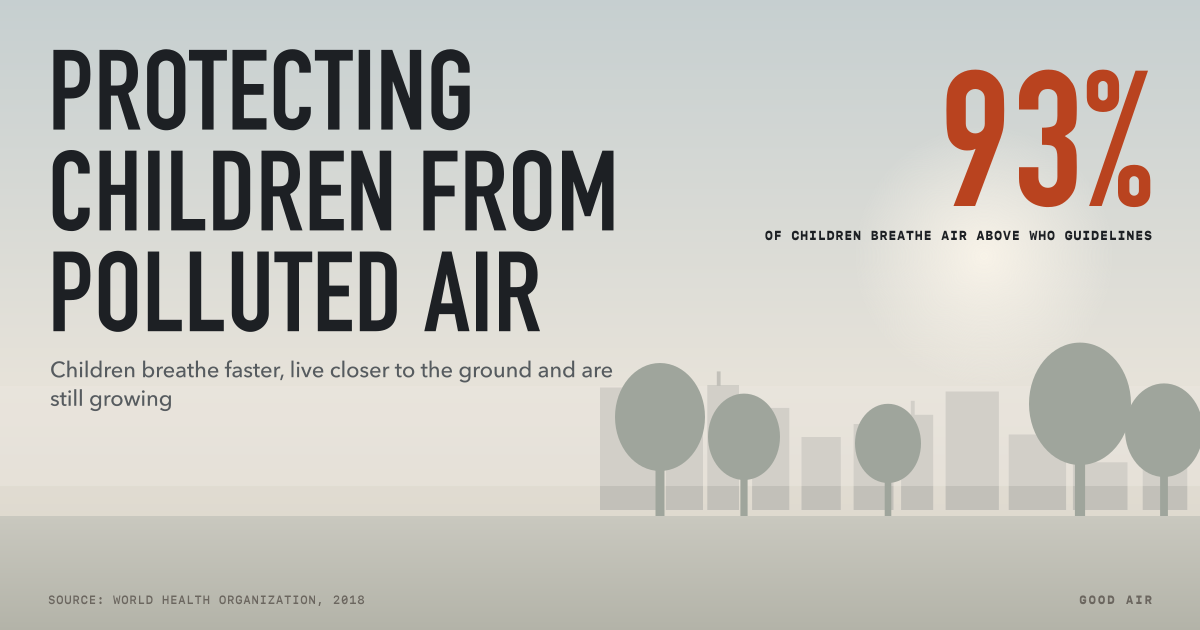
Children are a special case: they breathe faster than adults and their lungs are still growing. Our parent's guide to air pollution covers school runs, play and masks for children.
Is a pollution cough harmful in the long run?
A cough from one smoggy week is usually short-lived. Living with dirty air for years is a different matter. The World Health Organization (WHO) estimates that outdoor air pollution caused 4.2 million early deaths worldwide in 2019, and that 99% of the world's population lived where its air quality guidelines were not met (WHO fact sheet, 24 October 2024-air-quality-and-health)). Of those deaths, WHO attributes 14% to COPD, 14% to lower respiratory infections and 4% to lung cancer; most of the rest are heart disease and strokes.
That is why the habits above matter beyond the cough itself. Delhi NCR's season is just starting: our Delhi air pollution tracker follows the daily readings and the GRAP emergency plan, and why Delhi's air turns toxic every winter explains what is ahead.
Frequently asked questions
How long does a pollution cough last?
A cough caused by smog tends to ease once you are breathing cleaner air, for example indoors with the windows shut and an air purifier running. It can hang on for weeks if you keep breathing polluted air or if it started with a cold. The NHS advises seeing a doctor if any cough lasts more than three weeks.
How do I get rid of a cough from air pollution?
The only real fix for a pollution cough is breathing less polluted air: stay indoors with windows shut on Poor or worse days, run an air purifier, wear a fitted N95 mask outdoors, and avoid busy roads and early mornings. India's health ministry also suggests warm-water gargles and enough water to drink; these soothe but do not remove the cause.
Can air pollution cause a sore throat?
Yes. Coarse PM10 particles in smog mostly land in the nose and throat, and India's health ministry lists throat irritation among the first effects of high pollution, along with stinging eyes and a cough. A sore throat with a fever is more likely an infection, which a doctor should assess.
What AQI causes coughing?
Sensitive people, such as those with asthma, can notice symptoms from Moderate levels. On the US AQI, the EPA says some of the general public may have symptoms from 151 (Unhealthy). On India's National AQI, Poor (201 to 300) and Very Poor (301 to 400) days, common in Delhi NCR in winter, bring widespread coughs and sore throats.
When should I worry about a cough during smog season?
Seek urgent help for difficulty breathing, chest pain, coughing up blood, or any sign of a stroke such as sudden limb weakness or a drooping face. See a doctor if a cough lasts more than three weeks, if you lose weight without trying, or if you have asthma, COPD or heart disease and your symptoms are getting worse.