Explainers · 4 min read
What is ISPU? Indonesia's air quality index, and how it compares with the US AQI
What is ISPU? Indonesia's official air quality index runs from Baik to Berbahaya. The five levels, what each means, and why it reads lower than the US AQI.
 By the Good Air team

In this article · 6 sections
ISPU (Indeks Standar Pencemar Udara, the Air Pollutant Standard Index) is Indonesia's official air quality index. It is set by the Ministry of Environment under Regulation No. 14 of 2020 and runs in five categories: Baik (Good, 0 to 50), Sedang (Moderate, 51 to 100), Tidak Sehat (Unhealthy, 101 to 200), Sangat Tidak Sehat (Very Unhealthy, 201 to 300) and Berbahaya (Hazardous, above 300).
If you live in Indonesia or are following the 2026 haze, ISPU is the number officials, schools and news reports use. This guide explains what goes into it, what each level means for you, and why apps that use the US AQI often show a higher number for the same air.
What ISPU measures
ISPU is calculated from continuous monitoring stations. Under Ministerial Regulation (Permen LHK) No. 14 of 2020 it covers seven pollutants: fine particles (PM2.5), coarse particles (PM10), carbon monoxide, nitrogen dioxide, sulphur dioxide, ozone and hydrocarbons (Mongabay Indonesia, 14 July 2022). Each pollutant gets its own sub-index, and the highest one becomes the station's ISPU. That pollutant is called the critical parameter (parameter kritis); during the haze it is almost always PM2.5 or PM10.
The ministry publishes the PM2.5 index every hour, around the clock. When the regulation took effect, the other pollutants were reported twice a day, at 09:00 and 15:00 WIB, according to Karliansyah, then the ministry's director general for pollution control (Kontan, 5 March 2021).
The five ISPU categories
| ISPU | Category | English | What it means |
|---|---|---|---|
| 0 to 50 | Baik | Good | Clean air. No limits on outdoor activity. |
| 51 to 100 | Sedang | Moderate | Acceptable. Sensitive people should cut long or heavy exertion. |
| 101 to 200 | Tidak Sehat | Unhealthy | Harmful air. Sensitive groups rest more and keep activity light; everyone cuts long or heavy exertion outdoors. |
| 201 to 300 | Sangat Tidak Sehat | Very Unhealthy | Health risk rises for many people. Sensitive groups avoid outdoor activity; others avoid long exertion outside. |
| Above 300 | Berbahaya | Hazardous | Serious health effects possible. Everyone stays indoors. |
The ranges are those reported by Katadata from the ministry's guidance, which also advises staying indoors where possible once ISPU passes 200 (Katadata, 18 August 2026). Sensitive groups means children, older people, pregnant women and anyone with heart or lung disease. Official displays colour the first three levels green, blue and yellow (Mongabay Indonesia); Good Air shows the top two in red and dark red.
ISPU vs US AQI: why the numbers differ
Many apps, including the international view in Good Air, also show the US EPA's Air Quality Index. The two indices use similar-looking 0 to 500 style numbers, but their breakpoints differ, and the US AQI is stricter on fine particles. For the same air, the US AQI usually reads higher, especially in the low and middle range.
Here are the same stations on both scales at 9 pm WIB on 18 October 2026, from Good Air's live data:
| Place | ISPU | ISPU category | US AQI | US category |
|---|---|---|---|---|
| Bandung | 32 | Baik | 48 | Good |
| Jakarta | 80 | Sedang | 111 | Unhealthy for Sensitive Groups |
| Pontianak | 171 | Tidak Sehat | 198 | Unhealthy |
| Pekanbaru | 218 | Sangat Tidak Sehat | 243 | Very Unhealthy |
| Palembang | 361 | Berbahaya | 389 | Hazardous |

Jakarta shows why this matters. ISPU 80 is Sedang, a level most healthy people can ignore. The same air on the US scale, 111, is Unhealthy for Sensitive Groups: a signal for people with asthma to take care. Neither number is wrong. They are different scales with different thresholds, a bit like Celsius and Fahrenheit with different warning lines. Our US AQI vs India's NAQI explainer shows the same effect with India's index.
Two practical differences are worth knowing:
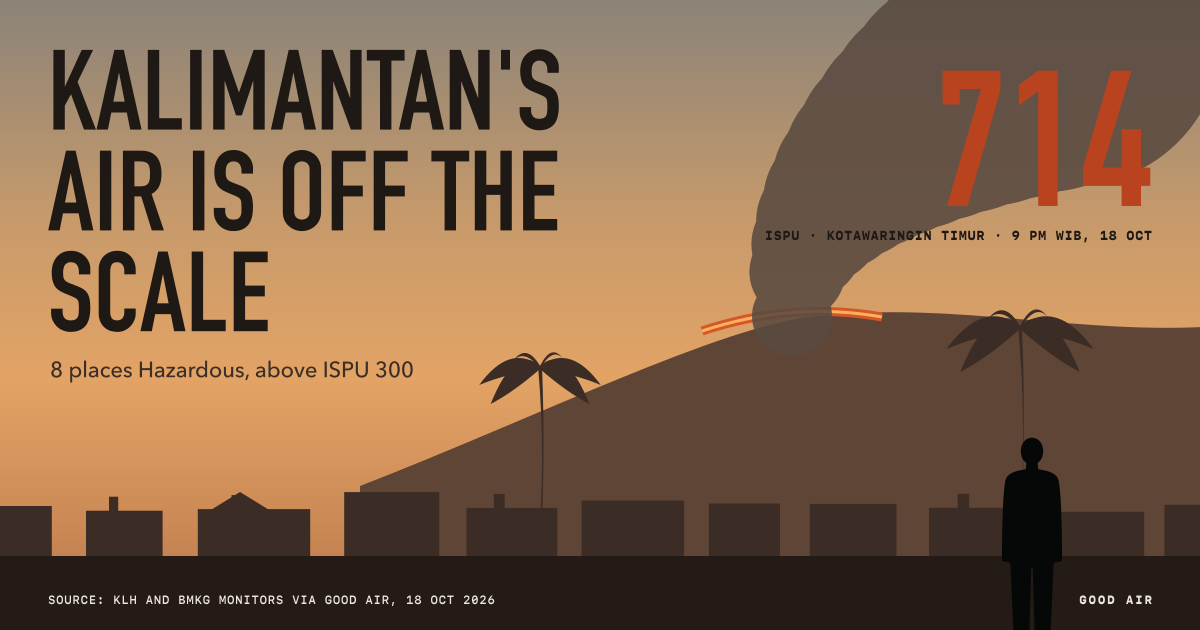
- ISPU has no ceiling in practice. The US AQI tops out at 500, but ISPU readings above 500 are published during severe haze. At 9 pm WIB on 18 October 2026, Kabupaten Kotawaringin Timur in Central Kalimantan read ISPU 714 while its US AQI showed the maximum, 500. See our Kalimantan haze update.
- Averaging periods differ. In the government feed Good Air uses, station ISPU is based on a 24-hour average, so it can lag a sudden change. For deciding whether to step out in the next hour, the latest hourly PM2.5 reading is the better guide.
ISPU, PSI and API: the haze in three countries
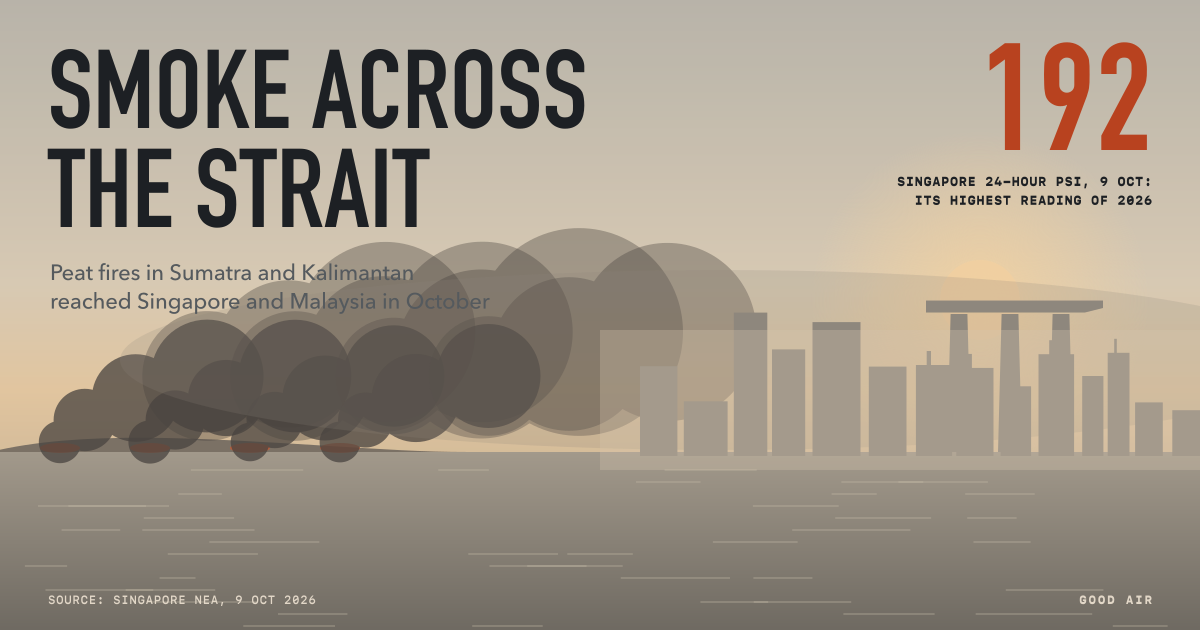
During the haze, Indonesia, Singapore and Malaysia each report on their own index: ISPU in Indonesia, the PSI in Singapore and the API in Malaysia. All three put the start of Unhealthy at 101, but their sub-ranges, averaging and pollutants differ, so a PSI of 150 in Singapore and an ISPU of 150 in Riau are not the same air. Our Southeast Asia haze guide has a side-by-side table.
What to do at each ISPU level
- Baik (0 to 50): a good time to be outside. Open the windows.
- Sedang (51 to 100): fine for most people. If you have asthma or a heart condition, keep long, hard exercise shorter.
- Tidak Sehat (101 to 200): cut long or strenuous activity outdoors. Sensitive groups take more breaks and keep activity light. Close windows when the reading is high.
- Sangat Tidak Sehat (201 to 300): stay indoors where you can, especially children and older relatives. Wear an N95 or KN95 respirator outside; see our mask guide. Run a HEPA purifier in the room you use most.
- Berbahaya (above 300): everyone stays indoors with windows shut. Postpone travel that is not essential, and seek medical help for chest pain or severe breathlessness.
This is general guidance. If you have a health condition, follow your doctor's advice and your local health office.
Where to check ISPU
The Ministry of Environment publishes station readings on its ISPU platform. Good Air shows the same government readings for about 90 Indonesian cities and regencies, with ISPU first, on our Indonesian-language pages: kualitas udara Indonesia hari ini, with a page per city such as Pekanbaru and per province such as Riau. The English Indonesia ranking leads with the US AQI instead.
Frequently asked questions
What is a good ISPU level?
An ISPU of 0 to 50 is Baik (Good), and 51 to 100 is Sedang (Moderate), which is acceptable for most people. From 101 the air is Tidak Sehat (Unhealthy), and people with asthma, heart disease, children and older adults should start limiting long or heavy activity outdoors.
What does ISPU stand for?
ISPU stands for Indeks Standar Pencemar Udara, which translates as the Air Pollutant Standard Index. It is Indonesia's official air quality index, defined by the Ministry of Environment in Regulation No. 14 of 2020, and is calculated from PM2.5, PM10, carbon monoxide, nitrogen dioxide, sulphur dioxide, ozone and hydrocarbons.
Why is the US AQI higher than ISPU for the same air?
The US AQI uses stricter breakpoints for fine particles (PM2.5), so the same concentration produces a higher number. At 9 pm WIB on 18 October 2026, Jakarta read ISPU 80 (Moderate) but US AQI 111 (Unhealthy for Sensitive Groups) on the same stations. Both are correct; they are different scales.
Can ISPU go above 500?
Yes. ISPU readings above 500 are published during severe haze, while the US AQI stops at 500. At 9 pm WIB on 18 October 2026, Kotawaringin Timur in Central Kalimantan read ISPU 714 on its government monitor. Anything above 300 is already Berbahaya (Hazardous), so the advice is the same: stay indoors.
Is ISPU the same as PSI?
No. ISPU is Indonesia's index and the PSI is Singapore's. Both treat 101 and above as Unhealthy, but they differ in their averaging, sub-ranges and pollutants, so the same number in Jakarta and Singapore does not mean exactly the same air.