News · 5 min read
Malaysia haze school closures: which states are shut, and when schools reopen
All schools in Johor, Melaka and Negeri Sembilan were shut by haze on 14 October, plus nine districts. Who decides closures, and how to check.
 By the Good Air team
In this article · 6 sections
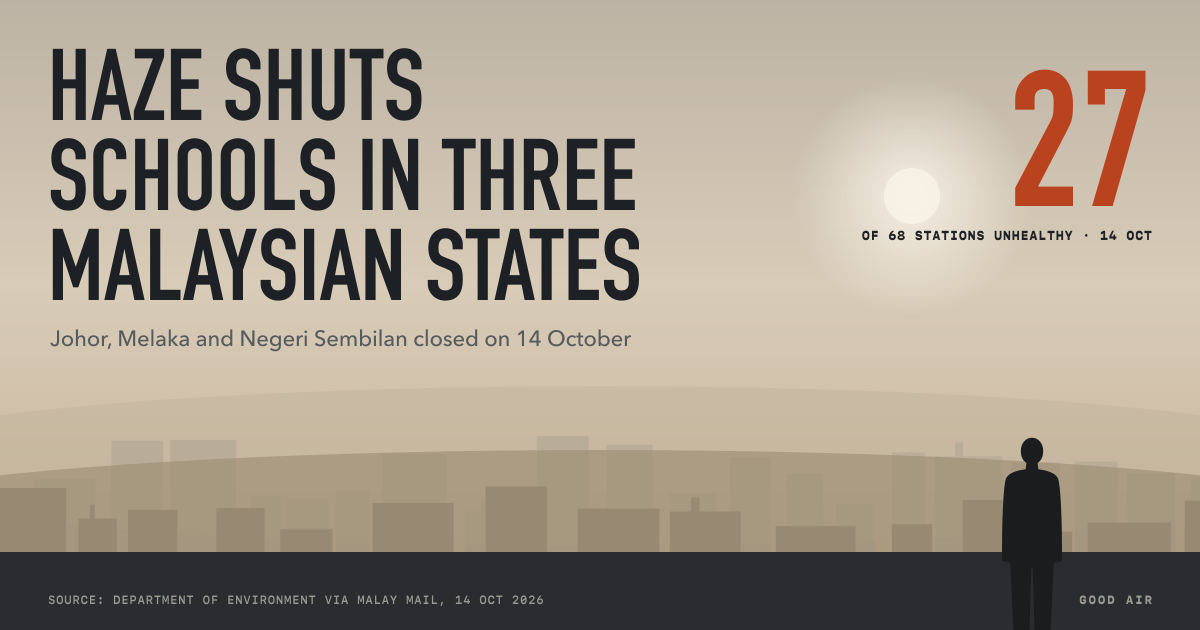
Haze from Indonesia's fires closed every school in Johor, Melaka and Negeri Sembilan on Wednesday 14 October 2026, along with schools in nine districts of Selangor, Pahang, Sabah and Sarawak. On the morning of 14 October, 27 of Malaysia's 68 monitoring stations read Unhealthy on the Air Pollutant Index (API), up from 20 the day before (Malay Mail via Yahoo News, 14 October).
As of midday on 14 October Malaysian time, no decision on Thursday 15 October had been published. Closures are now being decided one day at a time.
Which schools are closed on 14 October?
Education Minister Fadhlina Sidek announced the list in a Facebook post on 13 October (The Sun, 13 October):
| Area | Closed on 14 October |
|---|---|
| Johor | All schools |
| Melaka | All schools |
| Negeri Sembilan | All schools |
| Selangor | Hulu Langat and Sepang districts |
| Pahang | Kuantan, Pekan and Rompin districts |
| Sabah | Tawau district |
| Sarawak | Serian, Sri Aman and Lubok Antu districts |
Schools in every other state and district run as usual. That includes Kuala Lumpur and Putrajaya, which had shut on earlier days. Closed schools switch to home-based teaching and learning (PdPR), and teachers and support staff may work from home. Pupils who live in school hostels follow PdPR too (Malay Mail via Yahoo News, 13 October).
How we got here: a week of closures
- 9 October: The first wide closure. Schools shut in Kuala Lumpur, Putrajaya, Selangor, Melaka, Negeri Sembilan and Rompin in Pahang, with API readings consistently above 150 (Asia News Network, 9 October). Johor had already announced its own two-day closure.
- 12 October: Most states reopened after three days of moderate readings over the weekend. Johor stayed shut. 22 of 68 stations read Unhealthy, worst at Kota Tinggi in Johor with an API of 170 (Mothership, 12 October).
- 13 October: All schools in Johor, Melaka, Negeri Sembilan and Putrajaya closed, plus four Selangor districts (Hulu Langat, Petaling Perdana, Kuala Langat and Sepang) and Kuantan and Rompin in Pahang (Free Malaysia Today, 12 October).
- 14 October: Johor, Melaka and Negeri Sembilan in full, plus nine districts, as in the table above.
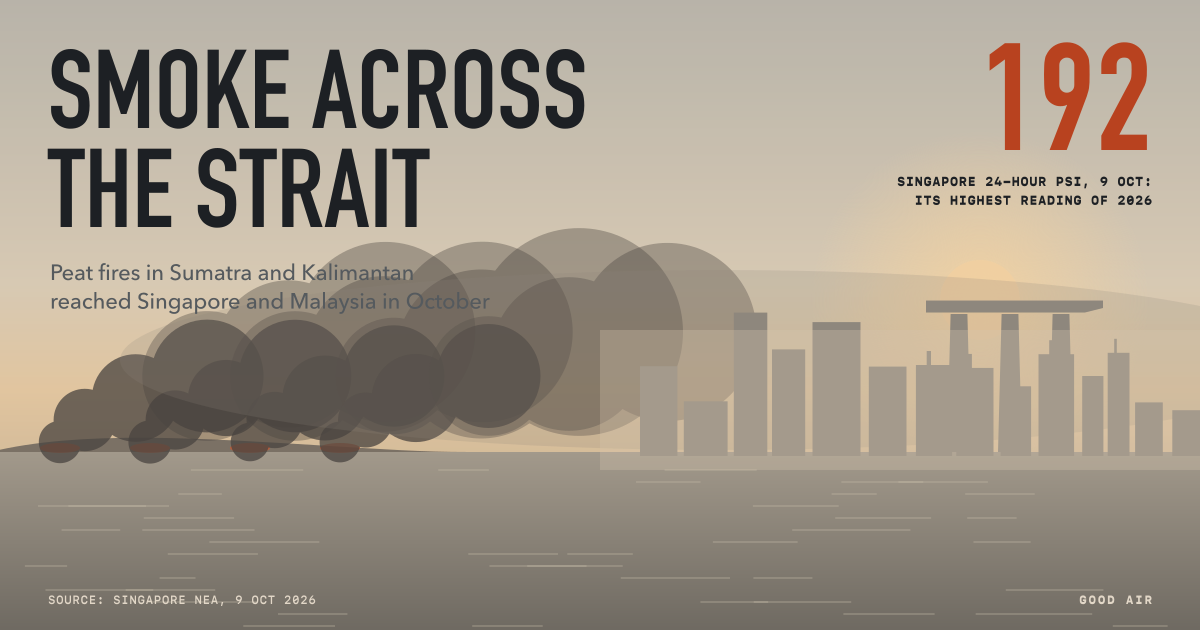
The background to the fires, and what is happening in Singapore and Indonesia, is in our main story: Southeast Asia haze 2026.
How bad is the air?
On the morning of 14 October, Pasir Gudang in Johor had the country's highest API at 177. Nilai in Negeri Sembilan read 174, and Klang and Johan Setia in Selangor both read 173. No station was in the Very Unhealthy (201 to 300) or Hazardous (above 300) range. Unhealthy on Malaysia's scale means an API of 101 to 200.

Johor had the most Unhealthy stations, seven: Pasir Gudang (177), Kota Tinggi (166), Larkin (164), Pengerang (162), Batu Pahat (154), Kluang (152) and Tangkak (151). In Melaka, Bukit Rambai read 169. Kuala Lumpur's Cheras station read 168 and Putrajaya 165, even though schools there were open (Malay Mail via Yahoo News, 14 October).
Good Air's own numbers above look higher. That is not a contradiction. We show every city on the US AQI, calculated from the latest hourly readings from the Department of Environment's monitors. At noon on 14 October that put Johor Bahru at 204, Klang at 201, Seremban at 200 and Kuala Lumpur at 199 on the US scale. The official API uses longer averages and a different scale, so it rises and falls more slowly. For school decisions, the API is the number that counts. For deciding whether to go for a run this afternoon, the hourly number is more useful. Our Malaysia air quality page lists every station live.
Who decides, and when?
There is no single automatic switch. The King, Sultan Ibrahim, called for schools in haze-affected areas to close when API readings stay between 150 and 180 for long periods, and the Education Ministry says it is following that call. State education departments and district education offices keep watch and can order closures if conditions get worse (Asia News Network, 9 October).
Johor runs its own process. The state checks the haze every day at noon and then decides whether schools open the next day. Its education committee chairman, Dr Muhammad Naqib Md Ghazali, said decisions also weigh health risks and overall safety, not only the API (The Star, 12 October). Johor had earlier said its schools would stay closed until 16 October. Treat that as a plan, not a promise of reopening on 17 October.
In practice, announcements have come in the afternoon or evening for the next day, usually through the minister's Facebook page, state education departments (JPN) and district offices (PPD).
When will schools reopen?
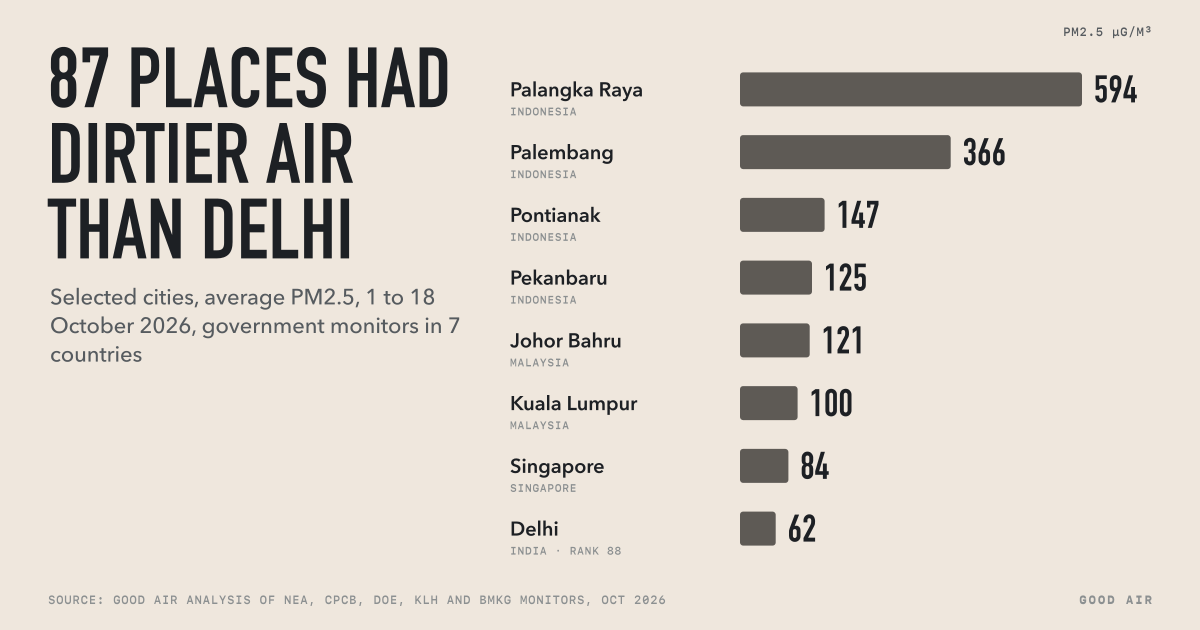
Nobody knows yet. Reopening depends on the API, and the API depends on the wind and on rain over Sumatra and Kalimantan. Near the fires the smoke is still extreme. At 11 am on 13 October, BMKG's monitor in Palangka Raya, Central Kalimantan, recorded a fine particle (PM2.5) reading of 976, in Indonesia's Hazardous category (Prokalteng, 13 October). As long as the fires burn, a shift in the wind can bring the smoke back to Malaysia within hours.
The haze usually ends when the monsoon rains reach the fire areas. In September BMKG expected the rainy season to reach Palangka Raya around late October, with most of Central Kalimantan still dry through October (Kantamedia, 18 September). Until then, expect more days of short-notice closures. Follow the Southeast Asia haze live tracker for each new development.
What parents can do
- Check the official list each afternoon. The Education Ministry, your JPN and your PPD publish the closures. Don't rely on forwarded messages.
- Keep children indoors on Unhealthy days, with windows shut. If you have an air purifier, run it in the room where they spend the most time.
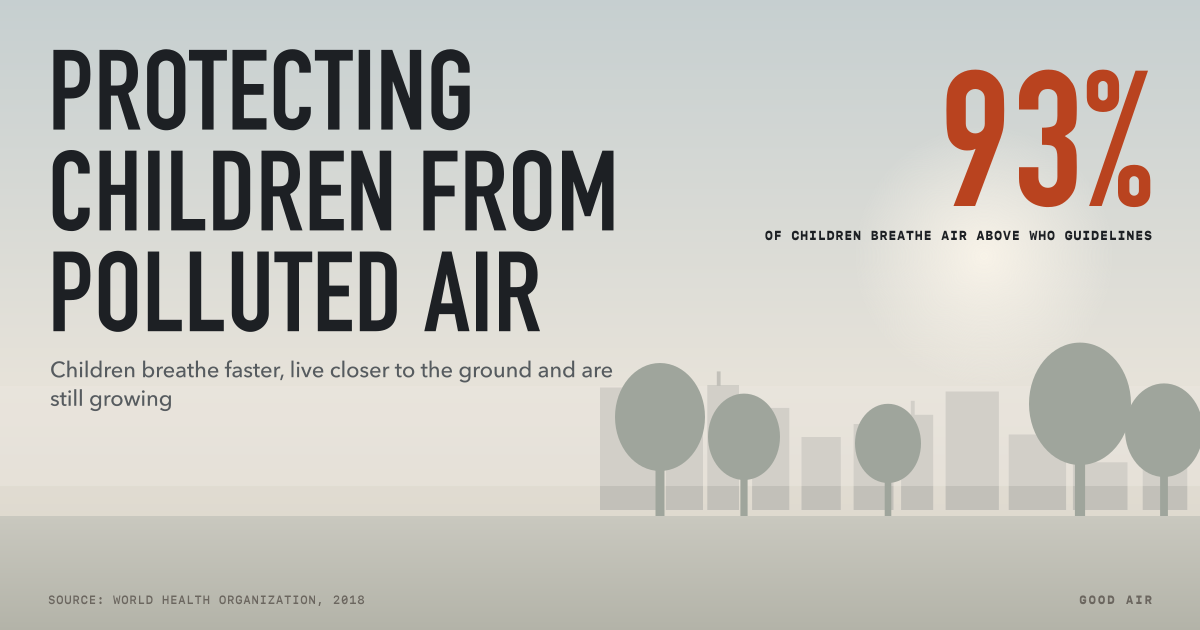
- Masks help only if they fit. Surgical masks do little against fine smoke particles. A well-fitted N95, KN95 or FFP2 helps, but most are made for adult faces. Our guide to N95 vs KN95 vs FFP2 masks explains what to buy and how to check the fit.
- Watch for symptoms. Children with asthma may need their reliever more often. Follow their asthma plan and see a doctor if breathing gets harder.
- Know what the numbers mean. Our guide to AQI 151 to 200 explains what to do at this level.
Frequently asked questions
Are schools closed tomorrow because of the haze?
Closures are announced the day before, usually in the afternoon or evening, by the Education Minister and state education departments. As of midday on 14 October no list for 15 October had been published. Check your JPN or PPD before the school run.
Which states closed schools because of haze?
On 14 October all schools in Johor, Melaka and Negeri Sembilan were closed, plus schools in Hulu Langat, Sepang, Kuantan, Pekan, Rompin, Tawau, Serian, Sri Aman and Lubok Antu districts. Earlier in the week Kuala Lumpur, Putrajaya and parts of Selangor and Pahang also closed.
At what API do schools close in Malaysia?
The Education Ministry follows the King's call to close schools when the API stays between 150 and 180 for prolonged periods. State and district education offices can also close schools sooner if they judge the risk is too high.
What is the API in Johor today?
On the morning of 14 October Pasir Gudang read 177, the highest in Malaysia, and seven Johor stations were in the Unhealthy range. The live Johor readings are on the Johor Bahru air quality page.
When will the haze end in Malaysia?
Usually when the northeast monsoon brings heavy rain to Sumatra and Kalimantan, typically from late October or November. A change in wind direction can bring cleaner days before then.