Guides · 3 min read
Wildfire smoke: how to protect yourself, your home and your family
How to read the AQI during wildfire smoke, which masks work, how to make a clean room at home, and when to keep kids and pets inside.
 By the Good Air team
In this article · 7 sections
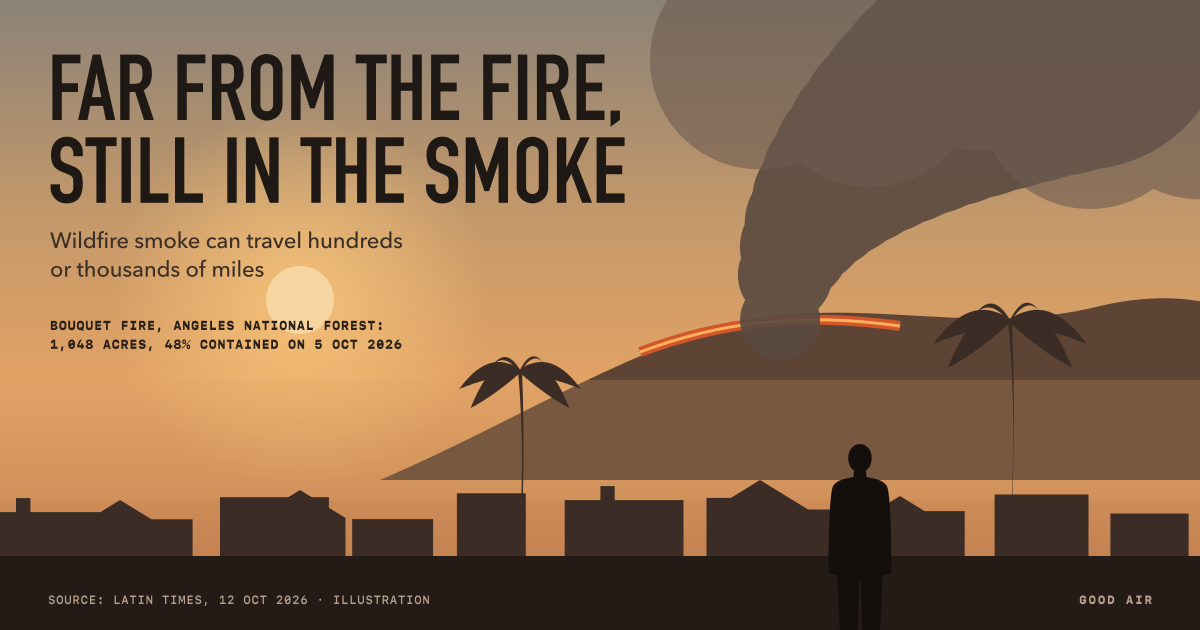
Wildfire smoke is a mix of gases and fine particles from burning trees, grass and buildings. The particles are the main danger. Most are smaller than 2.5 micrometres (PM2.5), small enough to reach deep into the lungs and the bloodstream. Smoke can travel hundreds or even thousands of miles, so you don't need to be near a fire to be affected.
This guide is for the US, where the EPA's AirNow network and the National Weather Service track smoke, but the advice applies anywhere.
Fire season is not over
Fire activity in the US has shifted south as autumn arrives. In Southern California, the Bouquet Fire in the Angeles National Forest started on 3 October 2026 and had burned 1,048 acres by 5 October, when it was 48 percent contained. Smaller fires have followed, including one near Santa Clarita that forced evacuations on 11 October (Latin Times, 12 October).
Track it live: where US air is worst right now and active National Weather Service alerts.
Read the AQI, not the sky
Smoke can look thick while the air at ground level is fine, and the reverse. Check the Air Quality Index from the monitor nearest you, ideally the hourly reading:
| US AQI | What to do during smoke |
|---|---|
| 0 to 100 | Normal activities. Unusually sensitive people watch for symptoms. |
| 101 to 150 | Sensitive groups (children, older adults, pregnant people, people with heart or lung disease) cut back on long or hard exertion outdoors. |
| 151 to 200 | Everyone reduces time outdoors. Move exercise inside. Sensitive groups stay indoors. |
| 201 to 300 | Everyone avoids exertion outdoors. Use a clean room at home. |
| 301 and above | Stay indoors with filtered air. Follow local emergency instructions. |
More detail for each range: AQI 101 to 150, 151 to 200, 201 to 300.
Masks that work against smoke
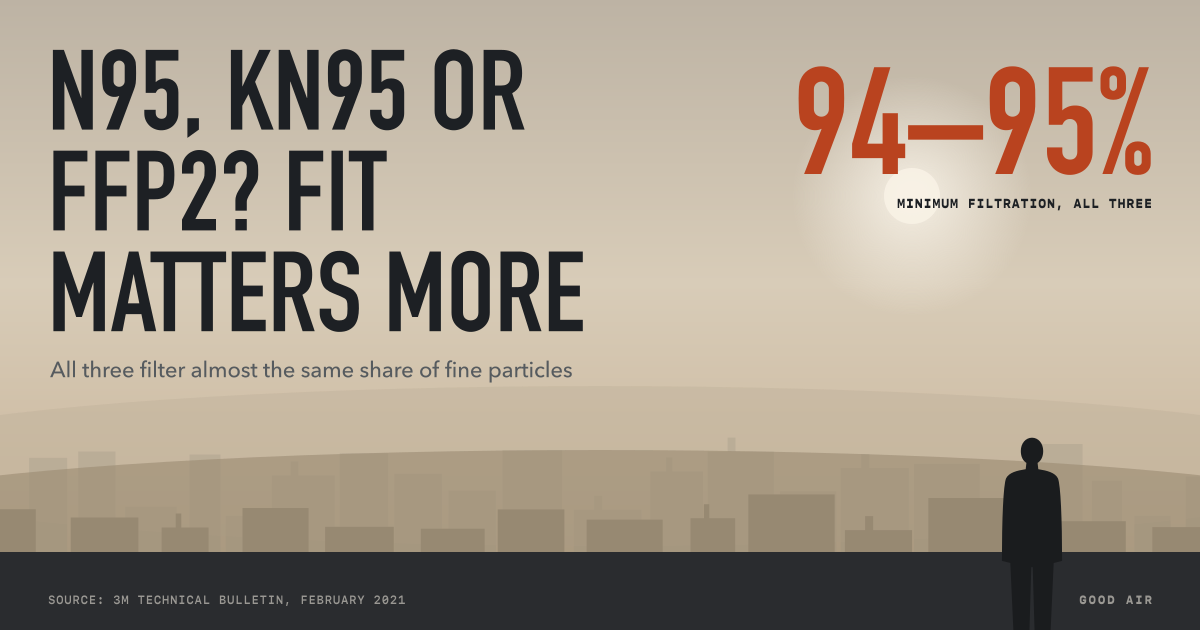
- Use an N95 or KN95 respirator (FFP2 in Europe). It filters at least 95 percent of fine particles, but only if it seals: no gaps at the nose or cheeks, and it won't seal over a beard.
- Cloth masks, surgical masks and bandanas don't protect against smoke particles.
- No mask filters the gases in smoke, such as carbon monoxide. The safest move is still to reduce time outside.
- Children's masks need to fit their faces; ill-fitting adult masks give little protection.
Make a clean room at home
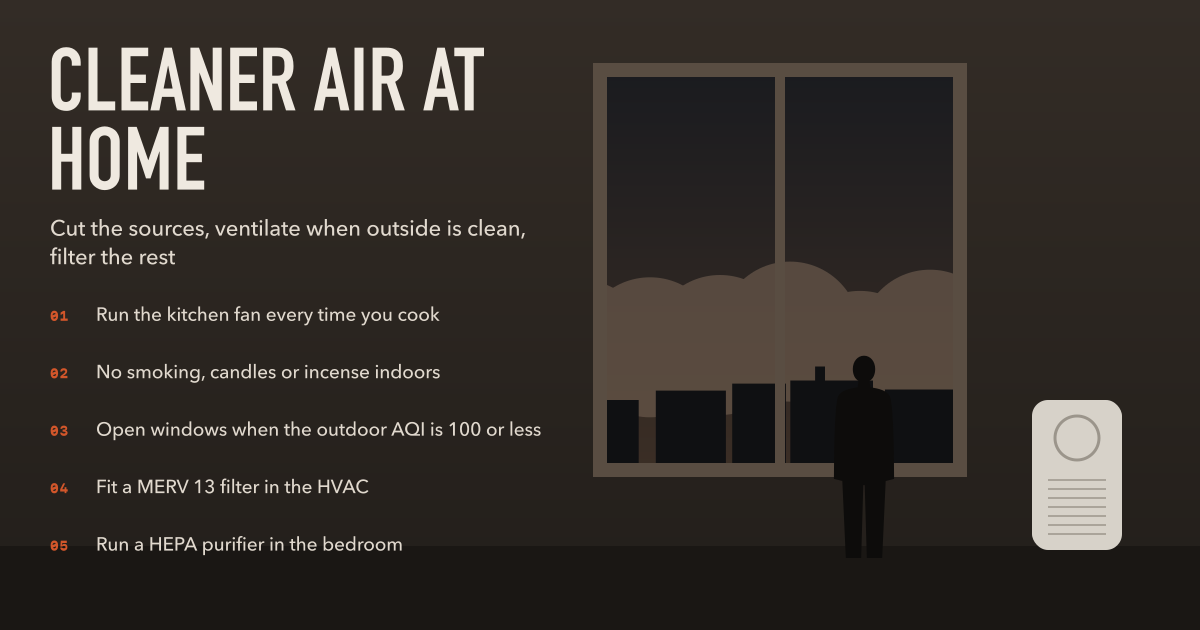
Smoke gets indoors through gaps and ventilation. Pick one room, ideally a bedroom with few windows, and:

- Close windows and doors. Seal obvious gaps with tape or towels if smoke is heavy.
- Run a portable HEPA air purifier sized for the room. Look for a clean air delivery rate (CADR) in square feet of at least two thirds of the room's floor area.
- No purifier? A box fan with a MERV 13 furnace filter taped to its back makes an effective low-cost filter. The four-filter "Corsi-Rosenthal box" works even better. Never leave a homemade fan filter running unattended.
- Set central air to recirculate and use the best filter your system takes, MERV 13 if possible. Turn off swamp coolers and whole-house fans, which pull smoke in.
- Don't add indoor pollution: avoid frying, candles, incense, gas stoves without a hood, smoking and vacuuming, which stirs up dust.
In the car
Close the windows and set the air to recirculate. Car cabin filters help a little; some newer cars have HEPA-grade filters.
Children, pets and people at higher risk
- Children breathe more air for their size and spend more time outside, so they get a bigger dose. Move recess, practice and play indoors when the AQI is above 150, or above 100 for children with asthma.
- People with asthma, COPD or heart disease should have their medicines and an action plan ready, and seek care for chest pain, severe breathlessness or an irregular heartbeat.
- Pregnant people should limit exposure too; studies link smoke exposure to lower birth weight.
- Pets: keep walks short and bring outdoor animals in.
After the smoke clears
Ash on surfaces can contain irritants and metals. Wet it down before cleaning, wear gloves and an N95, and avoid leaf blowers that put it back in the air. Replace HVAC and purifier filters after a heavy smoke event.
Frequently asked questions
What AQI is unsafe during wildfire smoke?
Above 100 is unhealthy for sensitive groups and above 150 is unhealthy for everyone. Above 200, everyone should avoid exertion outdoors and stay in filtered air where possible.
Do air purifiers help with wildfire smoke?
Yes. Portable purifiers with true HEPA filters remove most smoke particles from a room when sized correctly and run with windows closed. They don't remove gases.
Is it safe to exercise outside when it's smoky?
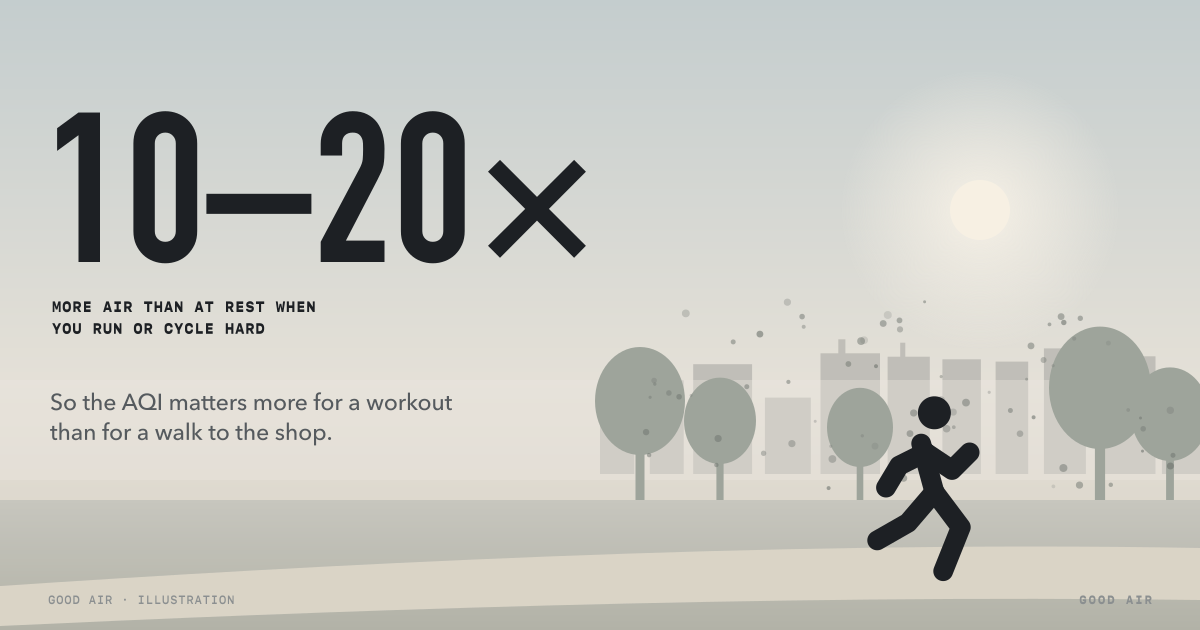
Not when the AQI is above 150. Heavy breathing pulls more smoke deep into the lungs. Move workouts indoors, or exercise when the reading drops.
How far can wildfire smoke travel?
Hundreds to thousands of miles. Smoke from fires in Canada and the western US has repeatedly caused unhealthy air across the Midwest and East Coast.